
The Science and Soul of Forest Bathing: Identity, Reciprocity, and the Healing Power of Trees
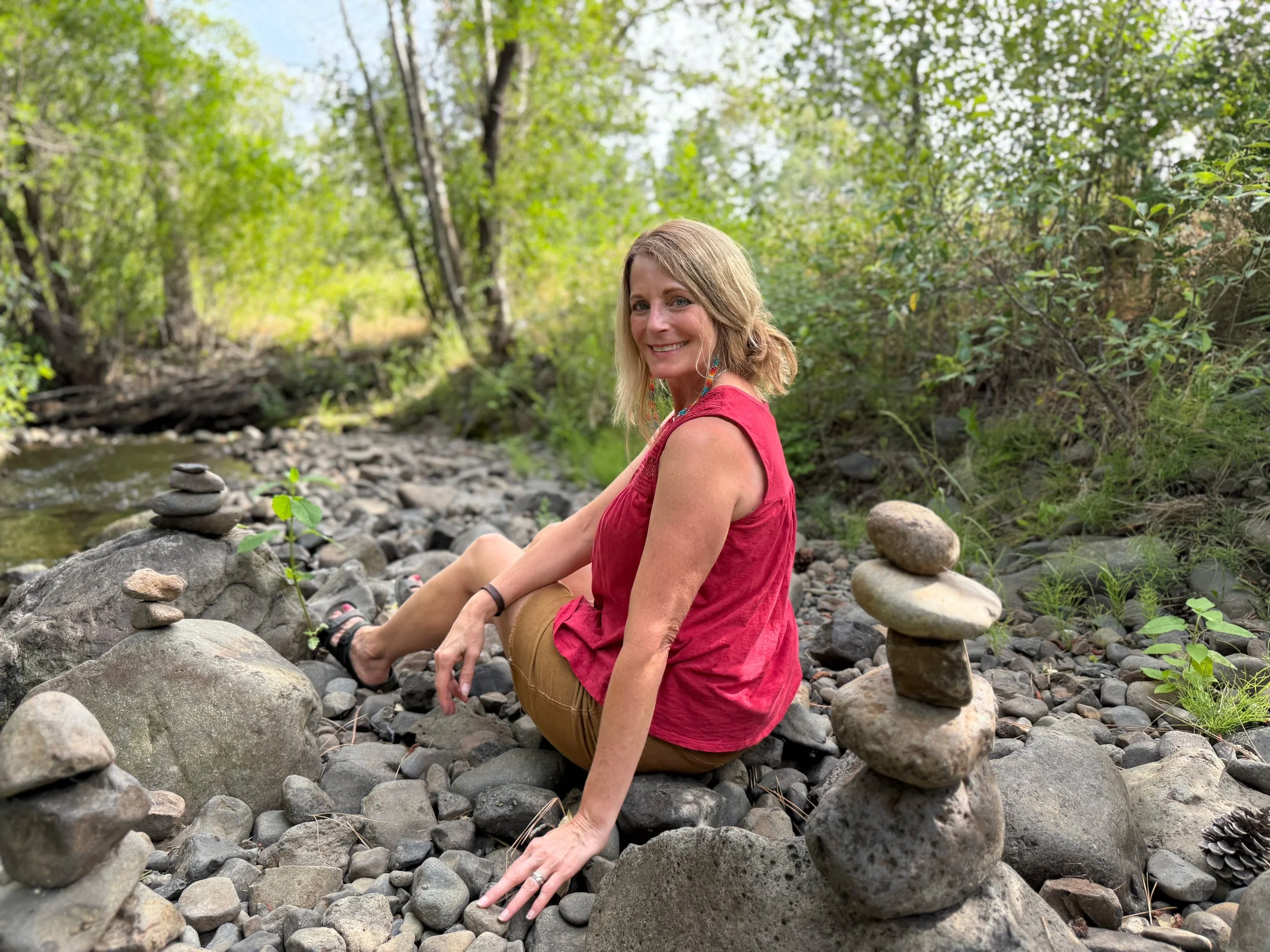
After decades behind screens in tech and cybersecurity, Dawn Ambrose is building a life around helping others disconnect from them. I joined her for a forest bathing session in Central Washington to find out why—and learned how nature can play a bigger role in your own life than you might think.
WHAT A PINECONE TAUGHT ME ABOUT CONNECTION
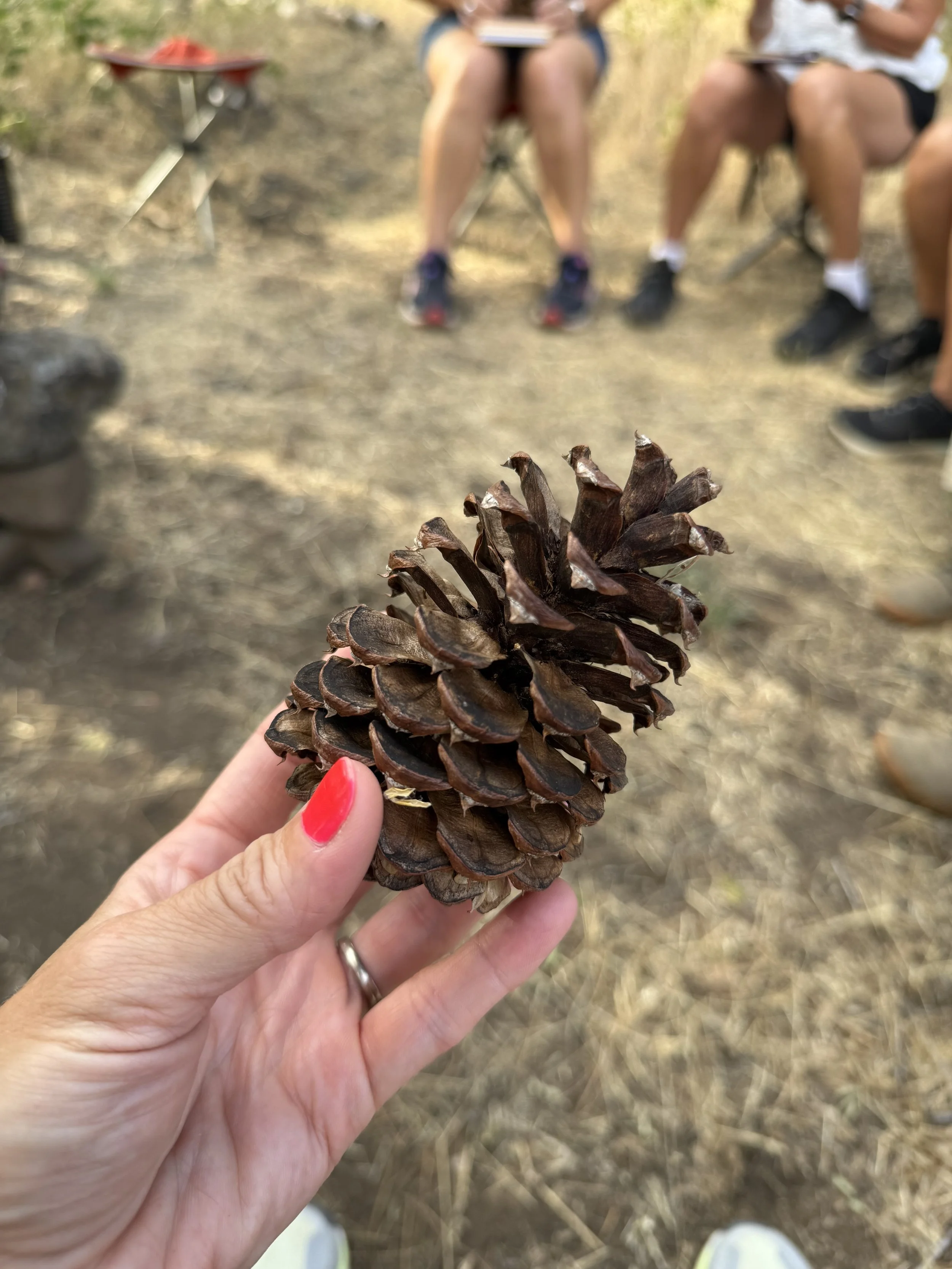
Dawn Ambrose, a certified Forest Therapy Guide and founder of Woodland Findings, had just handed me a pinecone. She asked us to look closely, search between its scales for a tiny seed, and notice how small it really is.
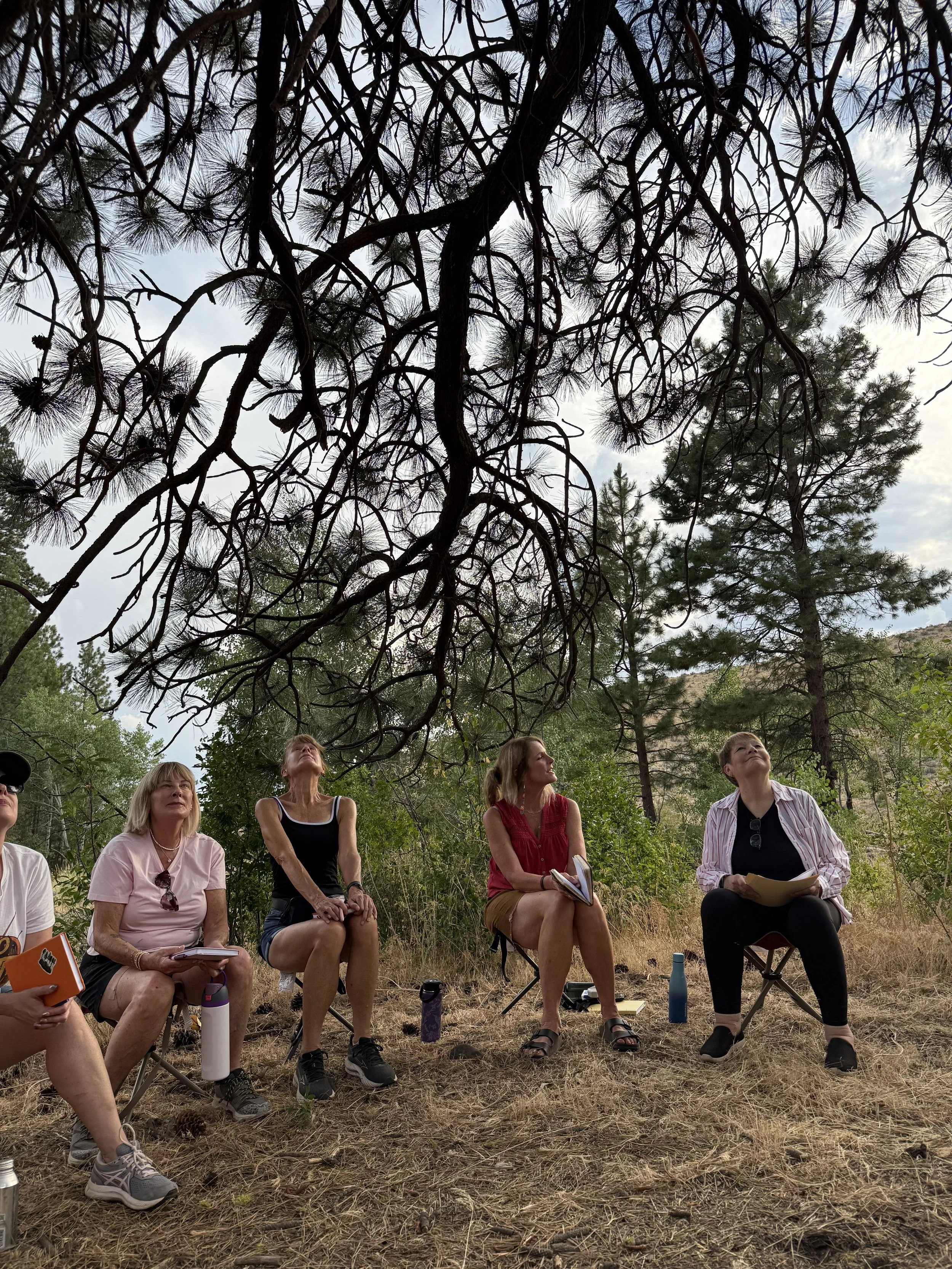
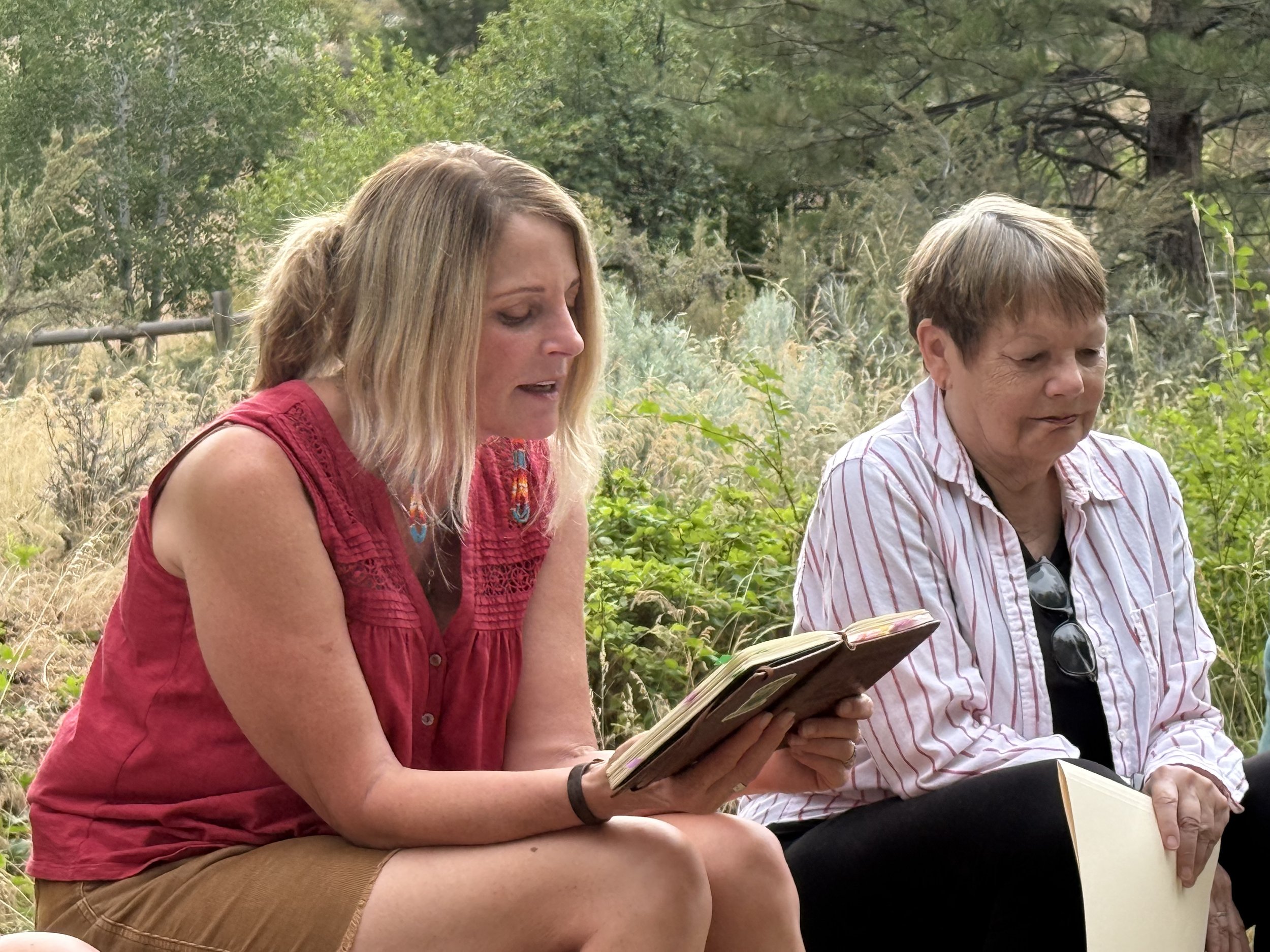
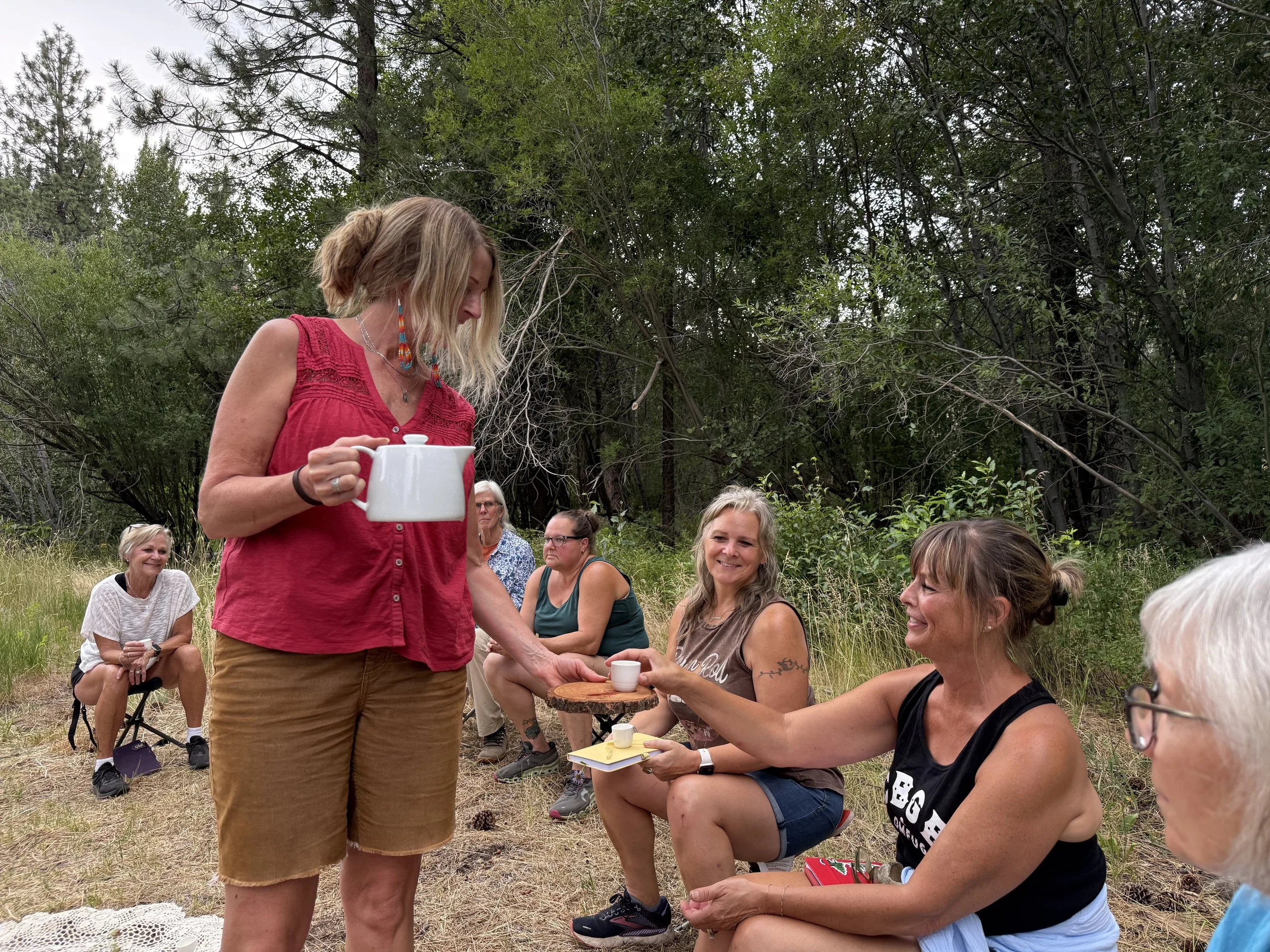
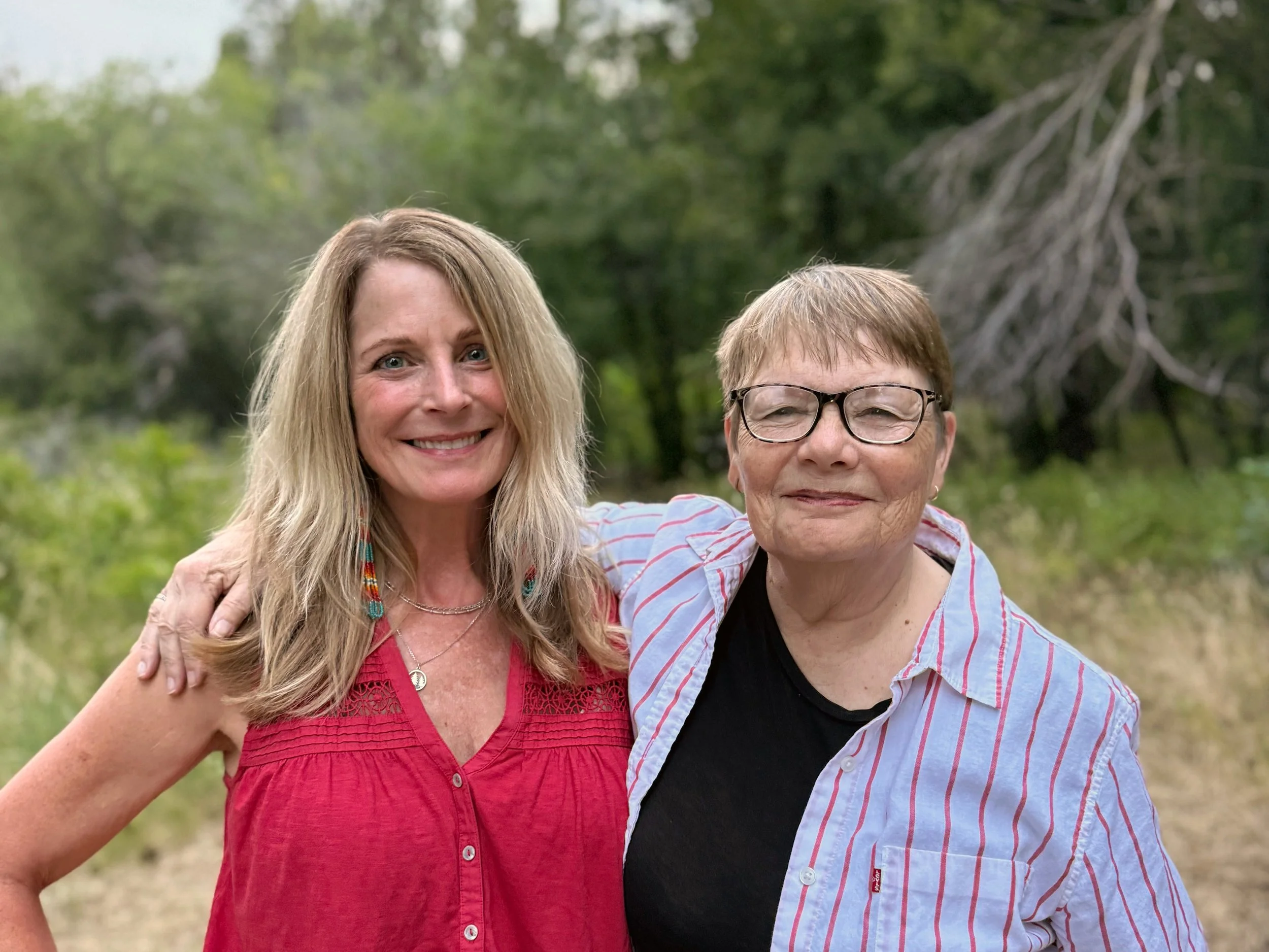
It was a warm July evening, and I had joined one of her “Wednesdays in the Woods” sessions in the pine forest on her property in Cooke Canyon, just outside Ellensburg, WA. About ten women had gathered for a nature immersion experience with Dawn and her guest, Susan Gregory, a best‑selling author who helps women reconnect with their true identity. We sat together in a circle beneath the tall pines.
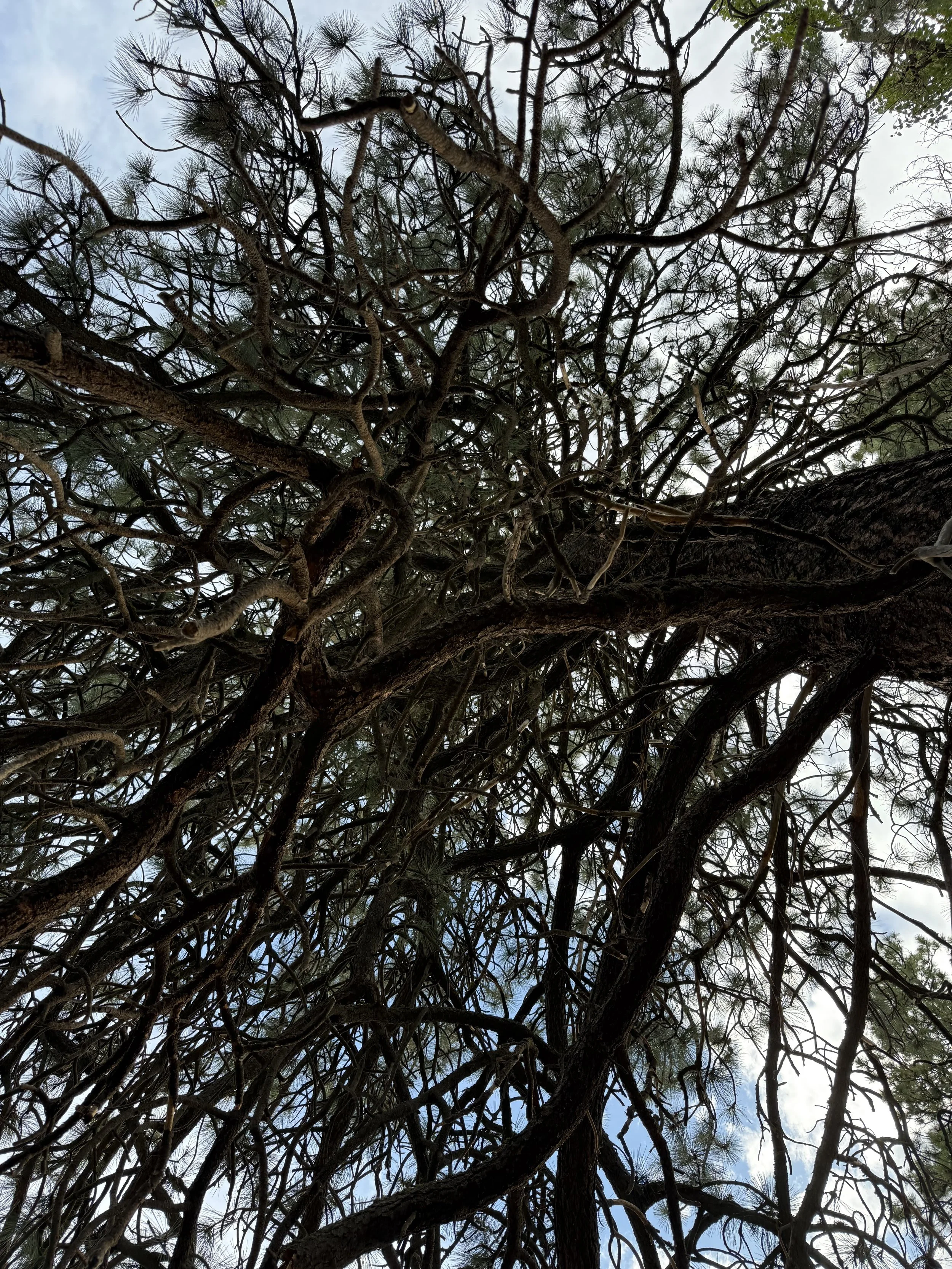
Susan asked us to look up at the trees surrounding us. Everything needed to begin the life of one of those towering giants, she said, was contained within a seed like the ones we were holding. “What are your observations?” she asked, inviting us to write in our journals.
I laughed to myself (and felt a little bad), remembering how I had accidentally stepped on a pinecone moments earlier and heard it crunch under my shoe. Now, holding one in my hand, I wrote: “Something that feels so small and insignificant now, actually becomes very grand and prominent over time. So many animals, birds, and insects become dependent on that big tree.”
That small observation—the feeling of empathy that came from simply looking and touching—is exactly what Dawn hopes people experience during her nature immersion sessions. “It helps us realize that we’re all in this together,” she told me.
FROM CYBERSECURITY TO THE FOREST
You might assume that Dawn, who appears to radiate joy when telling me about the wonder of the forest, is a woman that has spent her whole life out in nature. However, the truth is that she spent nearly 30 years working in technology, 20 of them in cybersecurity.
Dawn loved her career, but increasingly wanted something different: more time outdoors, more connection to community, and more opportunity to give back. This feeling was spurred during COVID. She went from being out in the world traveling for work to being essentially glued to a screen all day. Eventually she asked herself: How long do I want to keep doing this? Dawn retired from her tech career in January 2024.
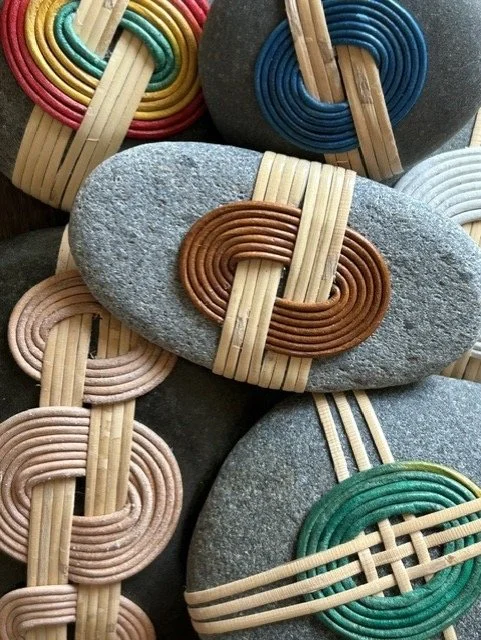
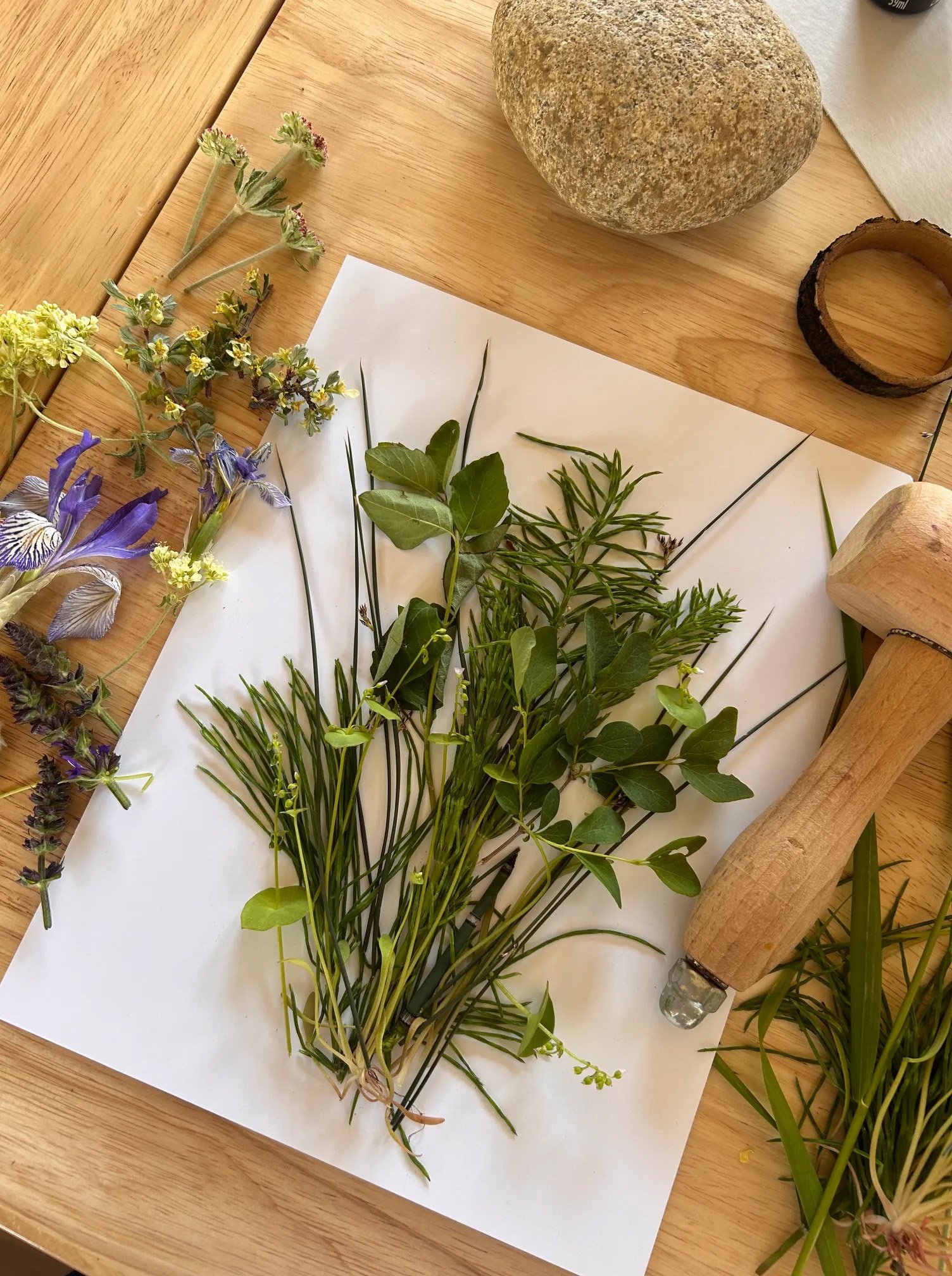
As an artist, and prior to becoming a certified Forest Therapy Guide, Dawn’s vision for retirement was to bring people closer to nature by offering occasional arts and crafts classes, utilizing natural materials found outdoors.
“A present mind is a happy mind and focusing on one thing, whether it's tying a rock with rattan or arranging flowers—these are things that evoke happiness, and help our mental well-being. I just always knew that when I was in nature, I felt best, and that others would too.”
Dawn first discovered forest bathing through Dr. Qing Li’s book, How Trees Can Help You Find Health and Happiness. And then after reading Florence Williams’ book, The Nature Fix,
what caught her attention wasn’t just the practice itself, but the idea of integration, carrying what you gain in nature back into daily life, through activities like reflection and creative work, such as the crafts Dawn already loved.
It gave her an unexpected “aha” moment: forest bathing could become the heart of what she had envisioned for Woodland Findings, with her art and crafts becoming a natural complement.
After retiring, she completed a 4-month certification program through The Forest Therapy School based on the East Coast that began with a week-long retreat in Washington, Maine.
“My business is Woodland Findings, but the tagline is ‘bringing the outdoors in’, so it's about bringing the outdoors inside our physical space, but it’s also about bringing the outdoors into our soul—into our being.”
THE MODERN PROBLEM
Dawn’s story made me think about how much our relationship with the natural world has changed. We are surrounded by nature, but we rarely experience it. We spend enormous amounts of time indoors, looking at screens, and rushing from one thing to the next.
For most of human history, we lived outdoors, in close relationship with nature. That's changed drastically in the last few hundred years—studies estimate Americans now spend around 95% of their time indoors, often glued to screens for work, school, or entertainment.
And when we are in nature, it usually revolves around activities: running, hiking, skiing, boating, playing a sport. “People have been sitting outside, living in close relationship with the land forever,” Dawn told me. “So why do we need to be intentional about it now? It's because we don't do it anymore. That's it.”
WHAT DOES IT MEAN TO “BATHE” IN A FOREST?
The type of nature immersion that Dawn leads also goes by the name Forest Bathing. In Japanese, it is Shinrin (forest) Yoku (bath) which translates in English to “taking in the forest atmosphere”. It made me giggle when Dawn said the first time she heard the term forest bathing, she pictured people out in the woods in old bathtubs bathing in moss.
In reality, forest bathing is the simple act of spending time in nature, engaging your major 5 senses: sight, smell, taste, touch, and sound. It’s not about doing an activity, like hiking or skiing, it’s about doing far less. Just sitting or walking casually and being present through sensory awareness—listening to the wind, smelling the scent of the trees, touching a leaf, etc. It’s an opportunity to disconnect from technology and just be with nature.
“I don't tell people you're going to come and have such a great time in nature,” Dawn explains. “I tell people you’re going to have the opportunity to just sit and be present.”
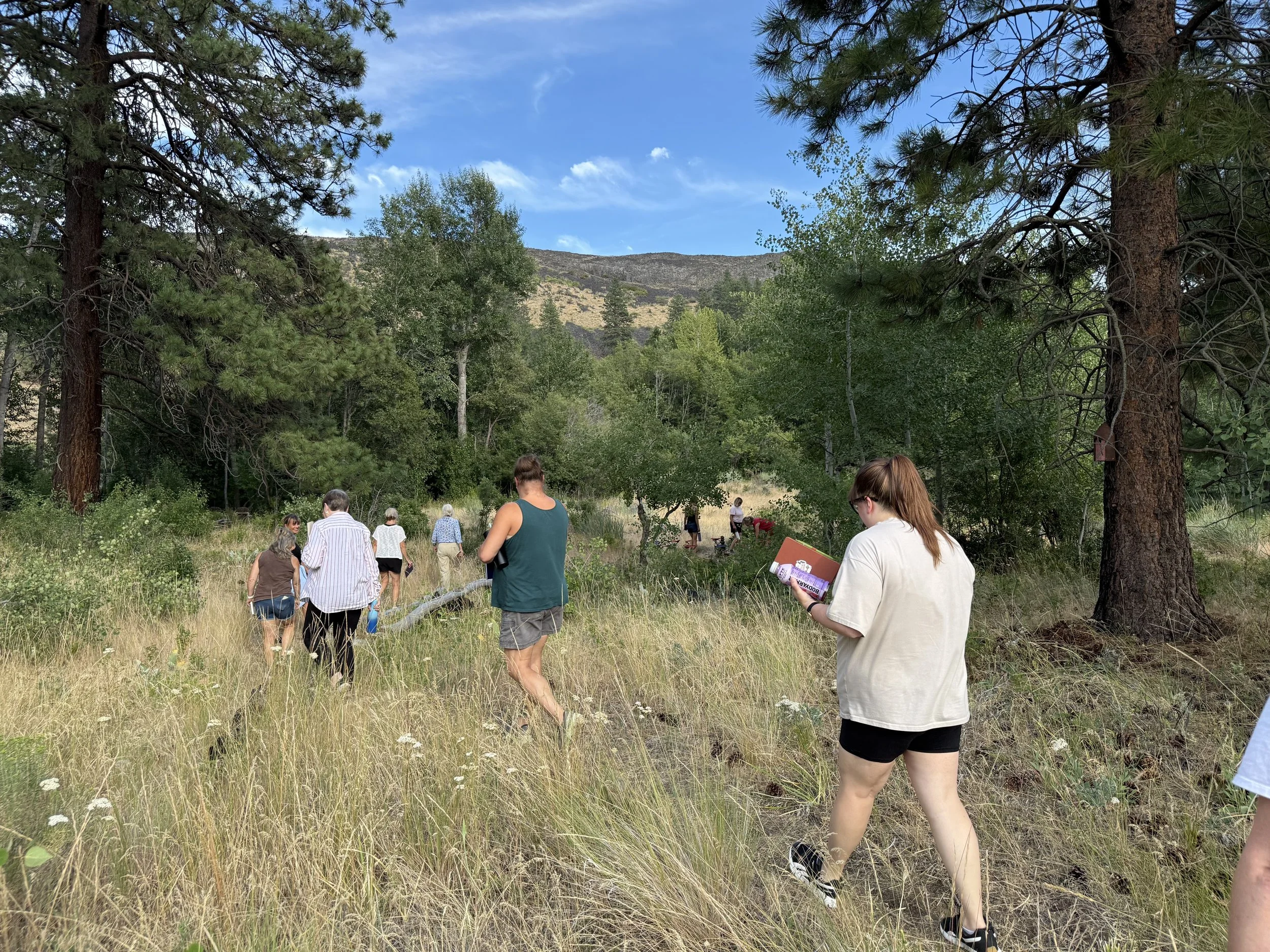
In the session, Dawn invited us to wander, and to intentionally look, listen, and touch. I noticed a plant with some little fluff balls that seemed like they would be soft to the touch but were surprisingly crunchy. I wandered over to an Aspen tree whose trunk looked solid and firm, however when I ran my hand across it, the trunk felt soft and velvety, and the dust from it stuck to my fingers.
Dawn asked us to write down our observations—I wrote: “the way things appear are not always what they seem.”
Susan guided us through journal prompts meant to help us look deeply into nature and ourselves. One question stopped me: “Where have you been defining yourself by something that isn’t really true?” It was exactly what I had been thinking moments earlier.
WE ARE MORE CONNECTED THAN WE THINK
I spent an afternoon with Dawn at her studio, where she explained the benefits of spending time outdoors in this mindful way. It's been shown to reduce stress, anxiety, and depression, improve sleep, and boost our overall mood and concentration. It can even help heal our physical bodies.
One of the main reasons, she told me, comes down to phytoncides—aromatic compounds that plants, especially evergreens, release as part of their own immune systems, using them to ward off insects and disease. When we breathe in the forest air, we're not just exchanging carbon dioxide for oxygen with the trees, we're inhaling these same protective compounds. Research has found they can boost natural killer cells, the white blood cells responsible for hunting down virus-infected cells in our bodies.
"So when we're breathing in the forest, we're breathing in these natural compounds that the trees are using to protect themselves," Dawn said. "It's just another fascinating way that we're connected to the natural world."
The more we recognize that we aren’t separate from nature, but part of it, the more our relationship with it begins to change.
NATURE AS A MIRROR
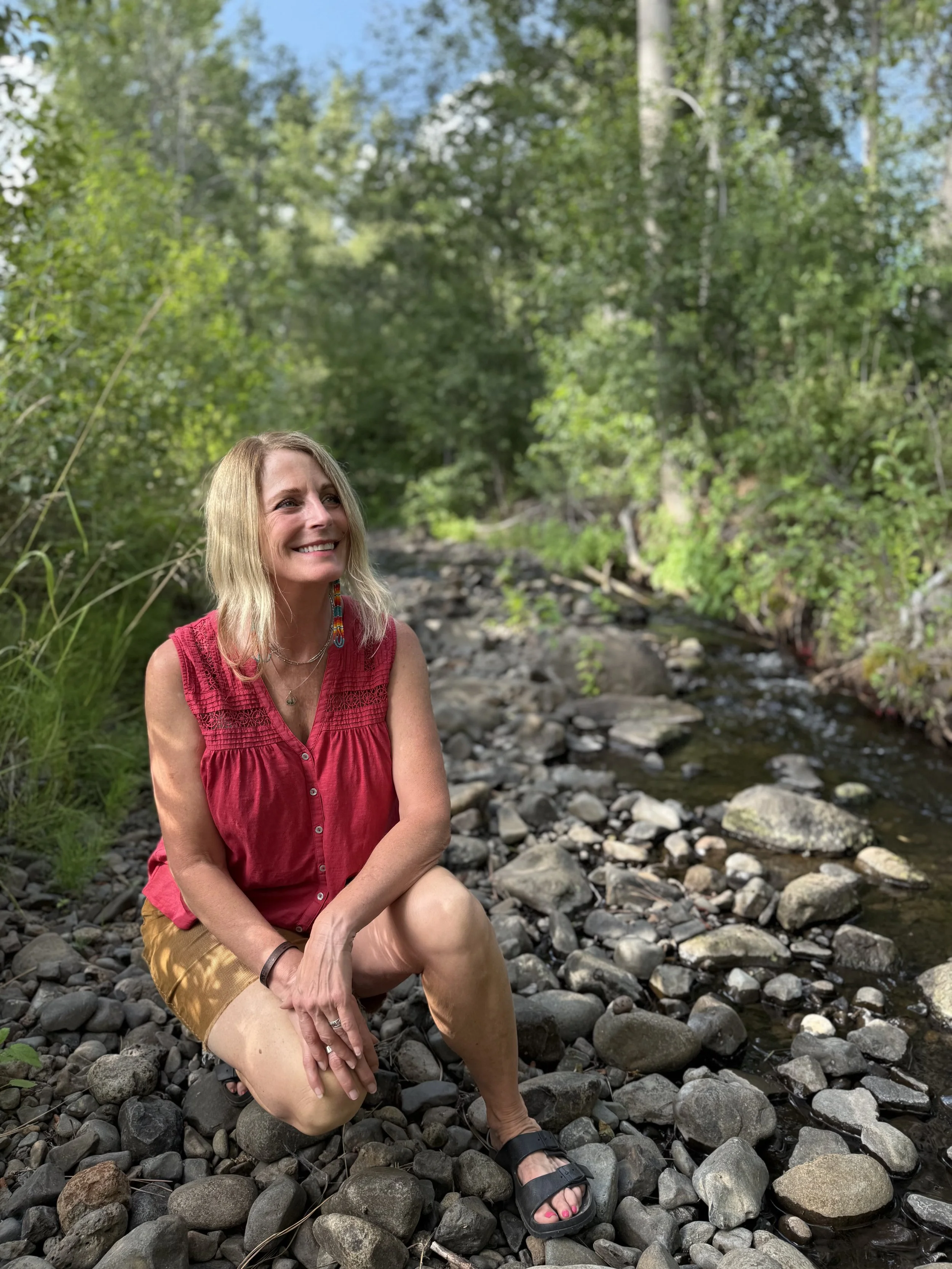
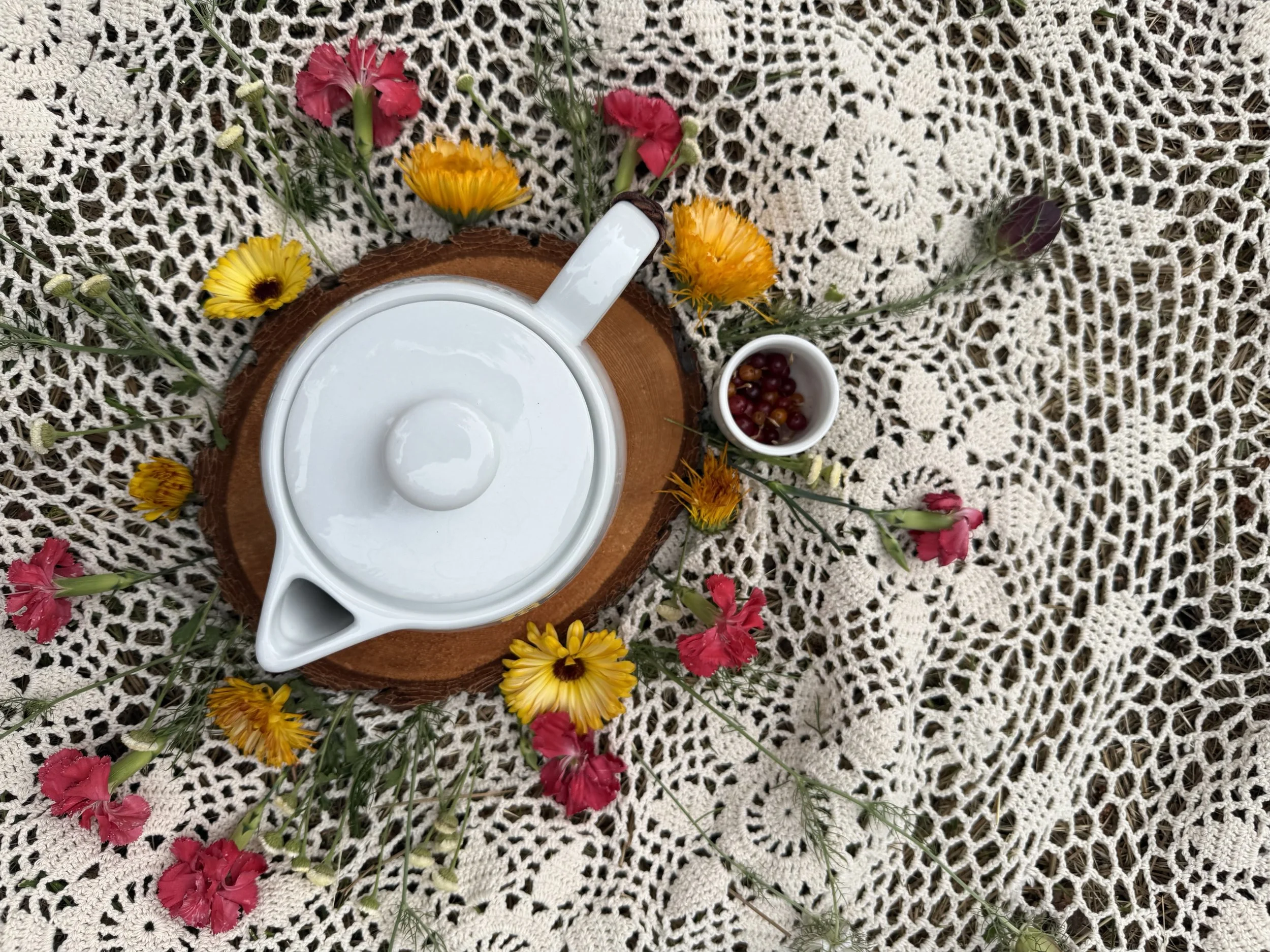
Later in the session, Susan asked us to consider: Who am I when I’m not defined by anyone else? She invited us to think about one thing we wanted to release, find a leaf, and write that word on it. Sitting beside a creek with my leaf, watching the water move around obstacles and carry whatever came its way—simply flowing, I felt myself settle into a meditative state. The word I wrote was “shoulds”: the things I believed I should do for my business that didn’t feel authentic to who I am.
Before Susan even asked us to release our leaves into the creek to be carried off by the flowing water, in my mesmerized and contemplative state I had an unexpected epiphany:
Just don’t do it.
It was as simple as that. Don’t do the things I think I should do simply because others do them. It sounds obvious now, but those “shoulds” had been taking up far more mental space than I realized, and deciding to let them go felt surprisingly freeing.
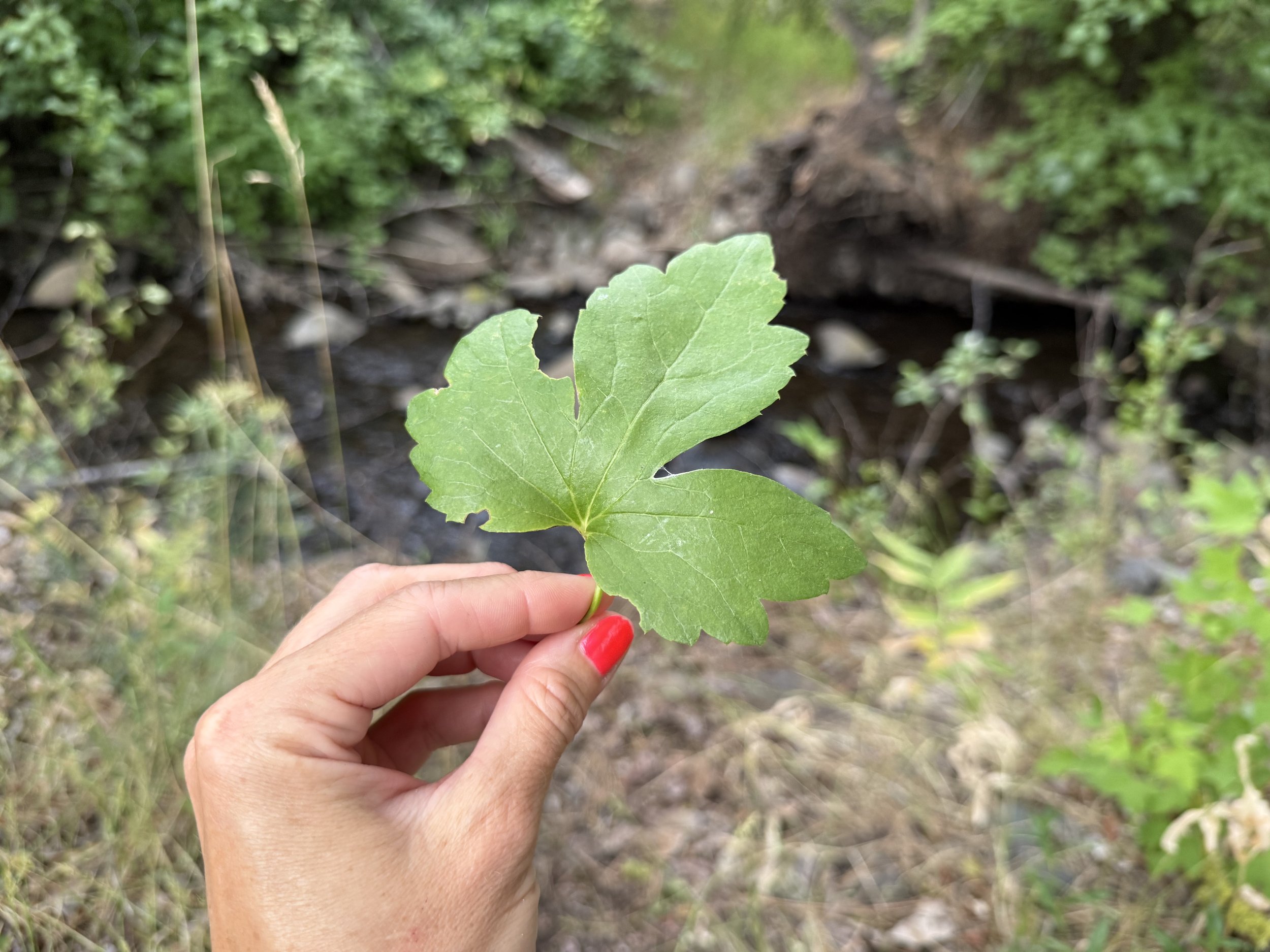
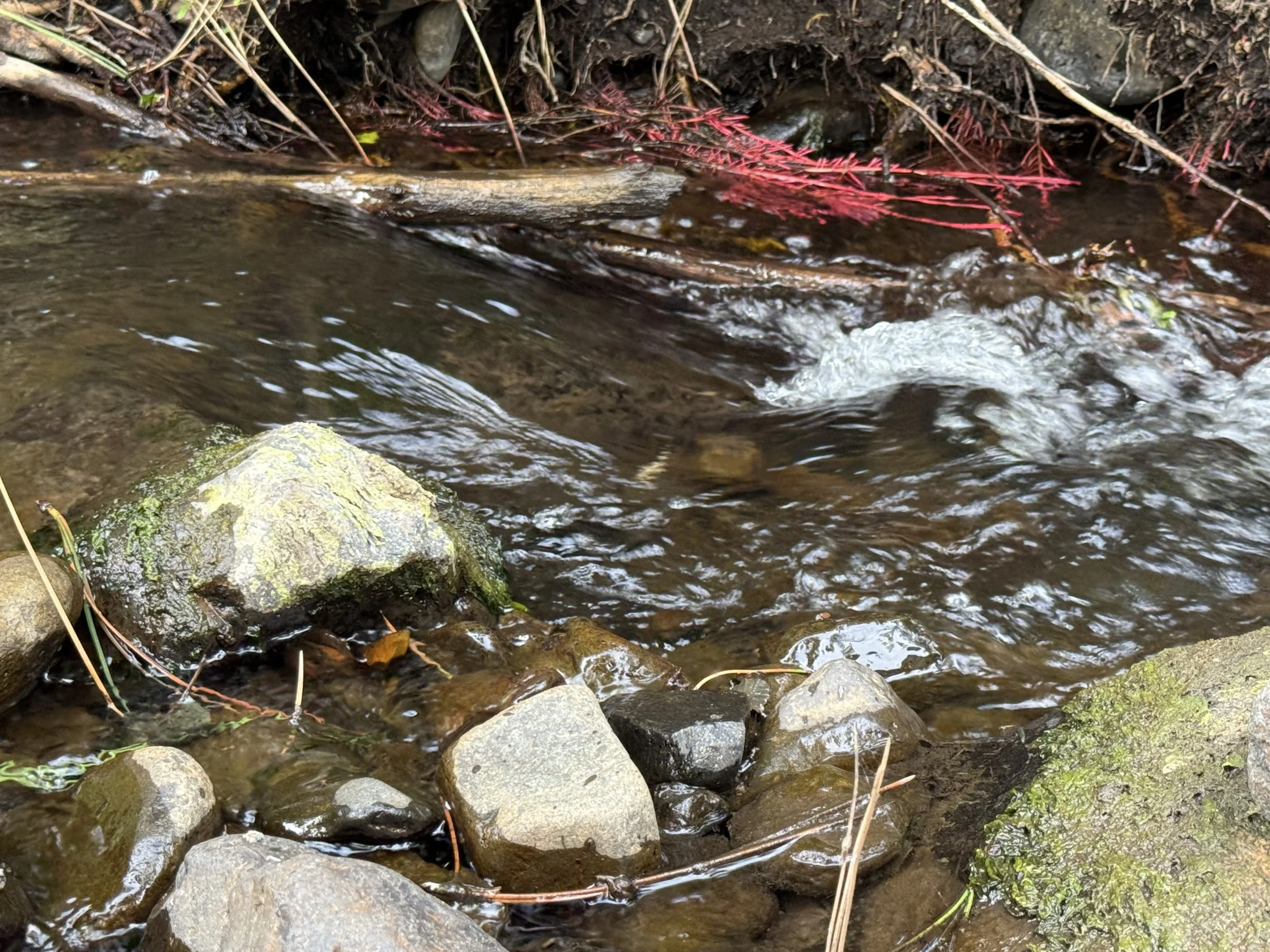
I was beginning to understand that nature gives us mirrors. Sit long enough, and it reflects back the answers that are already inside of you. Yet another way that nature gives to us.
Dawn does this work, she told me, to help people realize that we live with this world, not just on it. “People can call it woo woo or they can call it science,” she says. “But we are connected to everything and to each other.”
When we recognize we’re part of something much larger than ourselves and our problems, it becomes easier to feel grounded and less stressed. It helps us understand we are meant to be here.
“We are literally just a breath of dust,” she said.
THE BURNED TREE
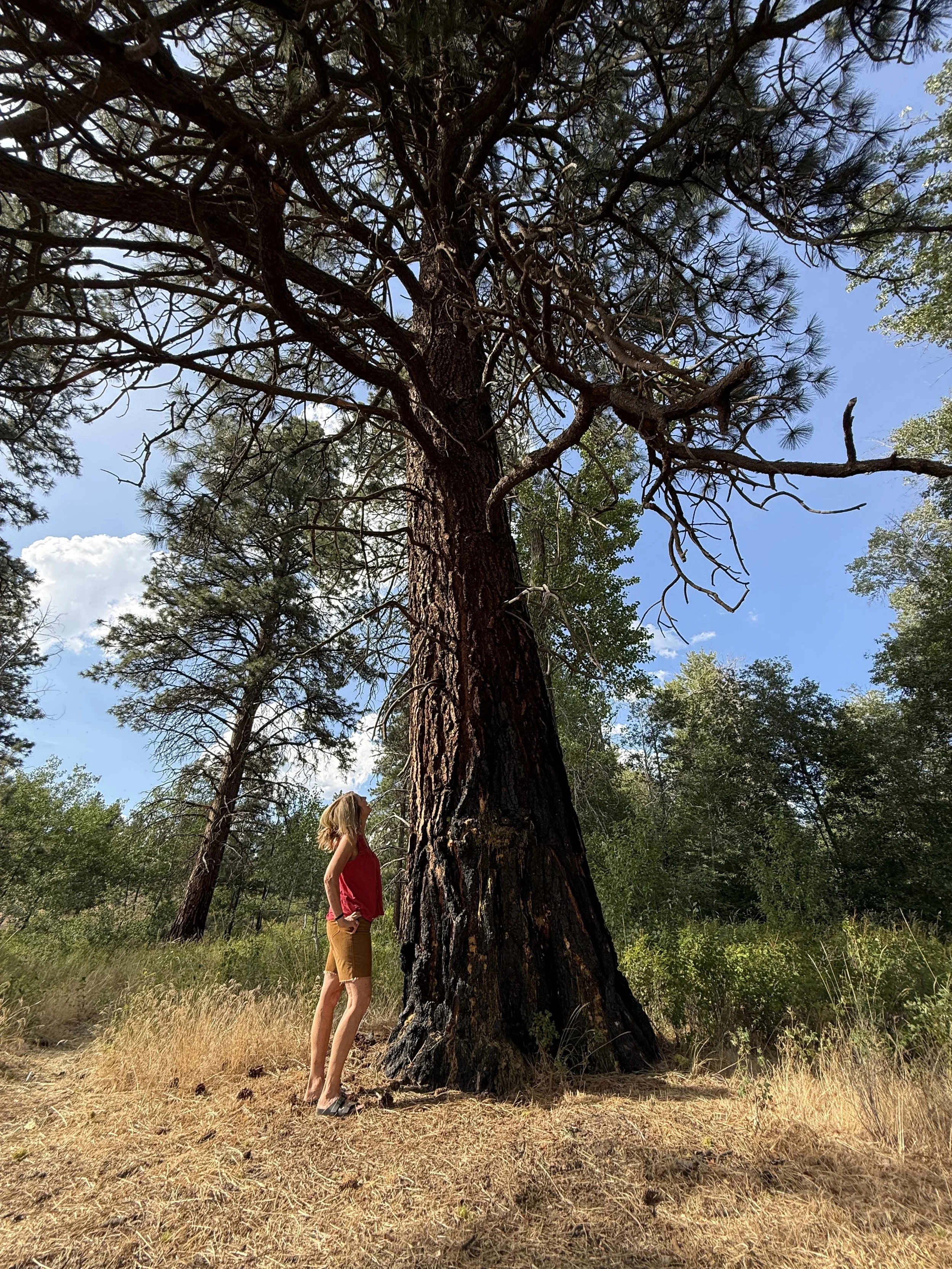
Dawn shared a story that really stuck with her about a particular tree. A wildfire had swept through years earlier, leaving a 50‑year‑old pine badly burned but still standing. Since the fire, the tree has released thick amber pitch across its trunk—a natural healing response as it seals wounds, protects itself from insects, and slowly rebuilds from the inside out.
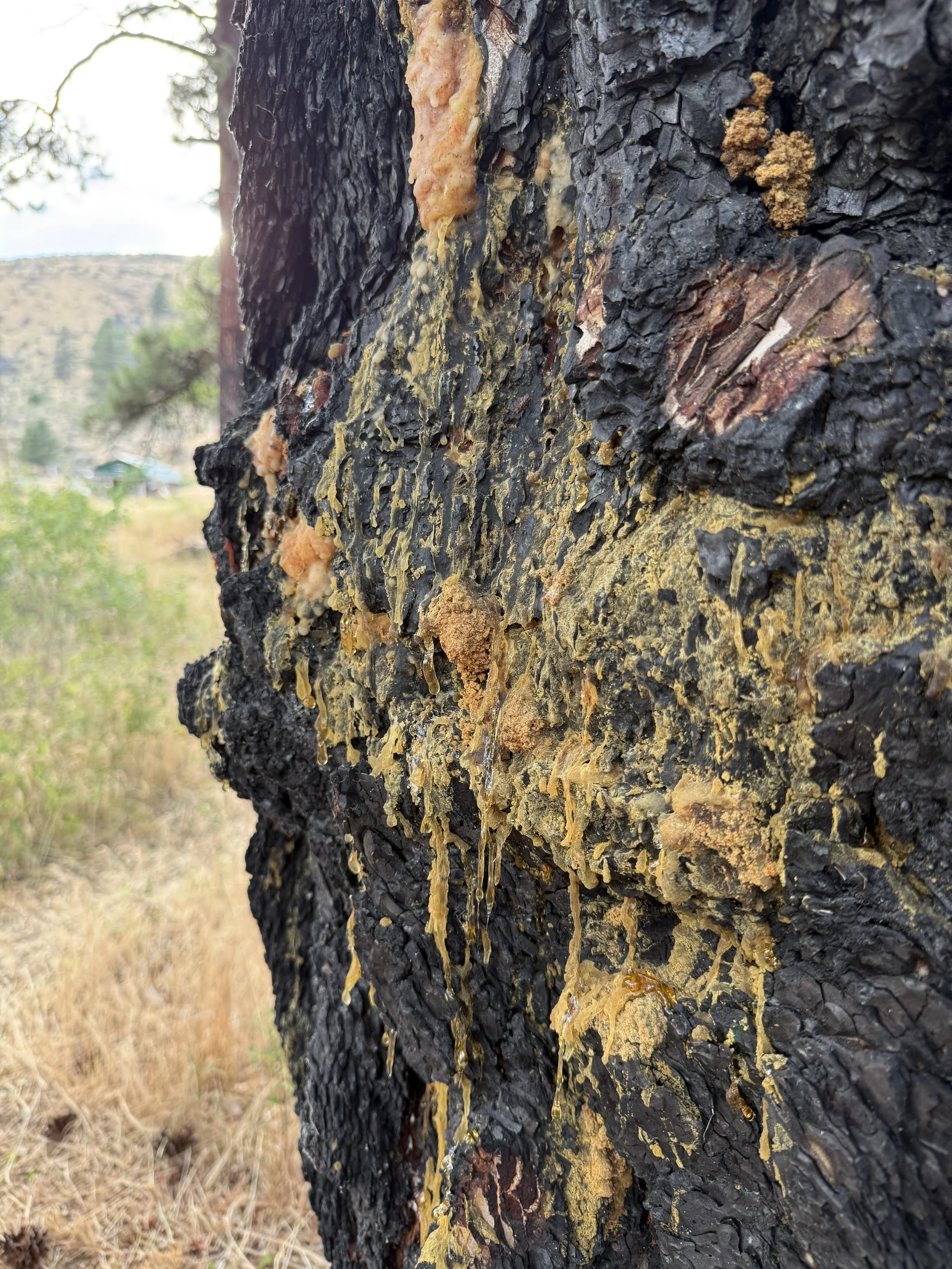
At the end of one forest bathing experience, Dawn invited participants to return to a place they felt drawn to during the session and simply sit with it. One person returned to the burned tree. Rejoining the group afterward, through tears, they shared that people in their life had left them "burned," just like the tree. But the tree was still alive, still growing and thriving.
“I want to be that tree,” the person said. “I am that tree.”
YOU DON’T HAVE TO GO FAR
What struck me most was that none of this was happening at some faraway wellness retreat. It was happening right here in Kittitas County—a place where more than 70% of the land is public. There's really no excuse not to get out there. You can check out a free Discover Pass through the library’s Check Out Washington program. Some libraries even offer Adventure Packs with guides and binoculars.
While Washingtonians are lucky to have one of the most diverse arrays of ecosystems in North America, from the temperate rainforests of the Olympic Peninsula to the Shrub-Steppe of the Columbia Basin, you don't need any of that to start. All you really need, Dawn says, is probably just outside your door: a "sit spot." It could be your backyard, a park bench, anywhere you can sit for 20 minutes a day (scientists say 2 hours a week is best), put your phone away, and notice a tree or the wind. Try it—you may be surprised what nature gives you.
WHY IT MATTERS
At the end of our conversation, I asked Dawn why this work matters to her. If you never go outside, she told me, never walk into the woods, never realize public land is just a mile up the road or over that ridge, why would you care about it? As Jacques-Yves Cousteau famously stated, "We only protect what we love, and we only love what we understand.”
"In the end, it comes down to love of nature and wanting to share that love," she said.
Dawn’s words brought me back to reciprocity. Nature gives us: oxygen, phytoncides, food, shelter, shade, perspective, beauty, wonder, and a place to simply be. But perhaps we don't recognize what we owe something until we feel connected to it. When we see ourselves as part of nature rather than separate from it, we become more invested in caring for the places that care for us.
I went into Dawn and Susan’s workshop expecting to enjoy a peaceful summer evening sitting in the woods and maybe learn a little bit more about nature. What I didn’t expect was to learn so much about myself in the process.
Maybe that’s the magic of what Dawn offers. You don't have to hike a mountain or travel somewhere exotic to experience it. You just have to stop long enough to notice what is already around you.
Simple, perhaps. But as Dawn says, profound.
Attend a Workshop
If you’d like to experience forest bathing or any of Dawn’s workshops for yourself, she hosts a variety of events in Ellensburg, WA and leads weekly forest bathing sessions at Suncadia Resort in Cle Elum, WA.
Instagram:
@woodlandfindings
Website:
https://woodlandfindings.com/